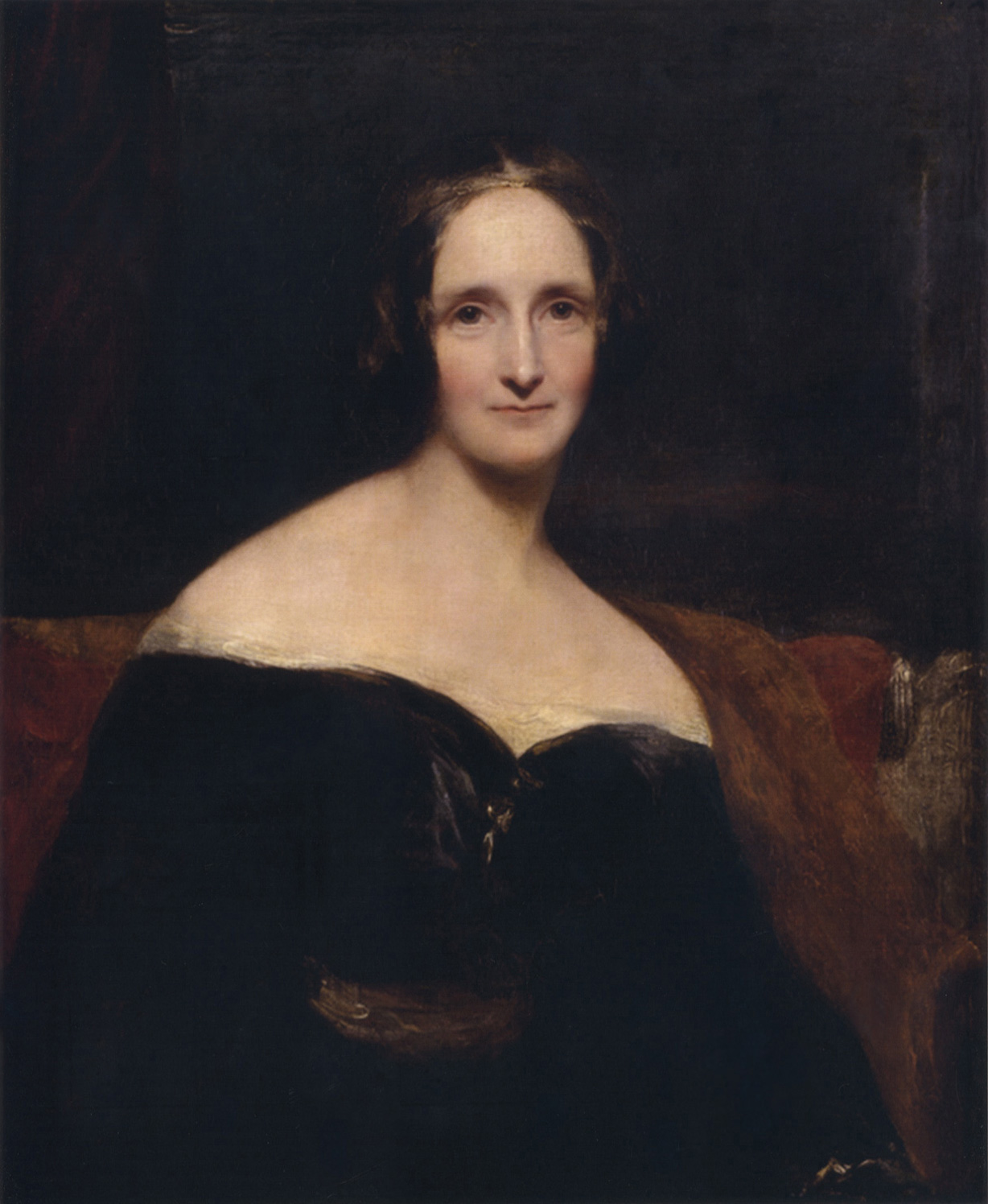
Three Influential Female Writers of the 19th Century

The nineteenth century was an interesting time for female authors. Many of the world’s greatest female authors were published during this time and the work they published would change the face of literature for more than just women. The publishing world had been truly opened up to them, even if many of them were still forced to publish under pseudonyms, for various reasons. Listed here are three of the best book-writing women of the time, in no particular order.

Mary Shelley
Mary Wollstonecraft Shelley

Mary Wollstonecraft Shelley was born on August 30, 1797. Her mother passed away eleven days after she was born. Her father eventually remarried and Mary grew up with her siblings, her father, her stepmother and her stepsiblings. She was mainly home schooled, but she was influenced greatly by her father and his intellectual friends, who were among some of the best thinkers of the time. Presumably under their tutelage, Mary published her first poem when she was only ten years old.

In 1814 at the age of sixteen, Mary ran away with the man who was the love of her life, Percy Bysshe Shelly. Percy was married at the time, but both of the lovers were impetuous and romantic. Mary went on to write a book about their impromptu trip together called "History of a Six Weeks Tour." She soon became pregnant with Percy’s child. She lost the child and two more, but the couple did go on to produce a son together.

In 1816 Percy’s wife committed suicide and then Mary and Percy married on December 30, of the same year. Two years later, in 1818, Mary Shelley published her greatest work, the timeless classic, "Frankenstein." In 1822 Percy Bysshe Shelley died in a drowning accident while going to visit with friends. After his death, Mary published several novels, but none were as popular as "Frankenstein." She died in her home in London on February 1, 1851.

Emily Dickinson
Emily Dickinson

Emily Dickinson was born on December 10, 1830 in Amherst, Massachusetts. Emily’s father was a lawyer and worked as the treasurer at Amherst College. He was also very active in politics. Emily was a bright young girl and by all accounts was witty, but shy. She had a normal childhood and traveled when necessary. She also attended Amherst College for a short time before having to drop out due to an illness.

Despite her normal upbringing and relatively active childhood, Emily slowly became a recluse after her time in college. She was rarely seen out of her house later in her life. However, she did manage to form and maintain close bonds with her friends through letters. Her works actually seem to have been improved by her self-imposed confinement. She was a prolific poet and her works spoke very authoritatively on matters such as love, death and suffering.

Emily lived in her parents' home up until her death. She never married or had children. In fact, it seems that she never had a romantic relationship at all. She died in 1886, at the age of eighty-six. It was only then that the true extent of Emily’s talent was revealed. During her life, she had only revealed a scant few of her poems to her closest friends and family. Upon her death, her sister discovered that Emily had written close to two thousand poems.

Jane Austen
Jane Austen

Jane Austen was born in England on December 16, 1775. She was one of eight children. At the age of eight, Jane went to a boarding school, where she received her formal education. However, most of her knowledge and inspiration for her work came from her family and her father’s library. Jane came from a very loving and close family that encouraged her writing and extensive reading very much. She would write poems, plays and stories that she would read to her family or enact with them.

In 1795 an event occurred that was likely the inspiration for many of Jane’s future novels. Jane Austen met Tom Lefroy. The pair fell in love with each other, but their union was frowned upon by Tom’s family, which was paying for his schooling and thought the match below him. They sent Tom away and the pair never saw each other again. Four years later, Jane published a novel that she called “First Impressions.” This masterpiece would later become known as "Pride and Prejudice." There are many similarities between this story and Jane’s life, but there is one major difference, the couple lives happily ever after.

Jane went on to publish a handful of novels in her lifetime, all of which met with success. They also shared a common theme, couples that married for love and not for money. Jane must have decided that she herself would never marry without love. She remained single for the rest of her life after losing Tom, and died at the age of forty-two at her home in Winchester, England.

Sources

Jane Austen Biography, retrieved 9/5/09, janeausten.org/jane-austen-biography.asp

Biography of Emily Dickinson, from Michael Myers, Thinking and Writing about Literature, 138-42, retrieved 9/5/09, vcu.edu/angweb/eng384/amilybio.htm

Mary Wollstonecraft Shelley, retrieved 9/5/09, english.upenn.edu/Projects/knarf/MShelley/bio.html


Overview of The Vampire Chronicles by Anne Rice

Cover for the first book in the series
The Vampire Chronicles by Anne Rice are well-written, historical, sophisticated stories of love, lust and, well, bloodsucking. Anne Rice incorporates many amazing factual places and events into these works of fiction. Better yet, her vampires are dramatic, romantic and appropriately evil.

Here are brief descriptions of the first three books in the series. There are ten (update: 11) novels in the original Vampire Chronicles and two new tales of the vampires. All of them are excellent novels.

"Interview with the Vampire"

"Interview with the Vampire" was published in 1976 and was the first of Anne Rice’s Vampire Chronicles. The novel begins with the seemingly young Louis deciding to tell the tale of his life to “the boy” (the boy’s name is Daniel in later novels). Louis tells the boy that he is a vampire and that he would like for the boy to record the story of his life.

Louis’ story begins in 1791. He is wracked with guilt over the death of his brother and seeks death. A vampire named Lestat becomes fascinated by Louis and eventually turns him into a vampire. Louis, who is sensitive and forlorn by nature, loathes being a vampire and is torn between love and hate for the flamboyant Lestat. Louis tells the boy a heart wrenching and bitter tale that spans centuries.

"The Vampire Lestat"

In "Interview with the Vampire," Lestat de Lioncourt is portrayed as a selfish and antagonistic creature, but comments he makes in Interview hint at a gloomy past. After reading Interview readers are left wanting to learn more about the enigmatic Lestat. "The Vampire Lestat" fills in all the details of how Lestat, unwillingly, became a vampire and later turned his mother and best friend into vampires.

Eventually, after the events that occurred in Interview, Lestat becomes just as discontented as Louis and decides to retreat into the ground. Fifty-five years later he is awakened by the sound of a heavy-metal band practicing nearby. He joins the band and becomes the lead singer. With Lestat at the helm, the band becomes famous. He then blatantly exposes the vampire world with his lyrics and by writing and publishing "The Vampire Lestat."

"The Queen of the Damned"

After Lestat becomes famous with his band, one of the oldest vampires on Earth, Akasha, awakens from her centuries-old slumber to seek out Lestat. The vampire world is angry with Lestat for his overt behavior, but Akasha is smitten with him. Unfortunately, Akasha is also going on a murderous rampage, killing all of the vampires she considers to be weak. Several other older vampires then come out of hiding, thus introducing readers to many new and interesting characters. In this novel Anne Rice weaves many new tales and blends many characters, new and old, together to create a story that is both intriguing and satisfying.

Novels in the Vampire Chronicles:

"Interview with the Vampire"

"The Vampire Lestat"

"The Queen of the Damned"

"The Tale of the Body Thief"

"Memnoch the Devil"

"The Vampire Armand"

"Merrick"

"Blood and Gold"

"Blackwood Farm"

"Blood Canticle"

Update: "Prince Lestat"

Shelly Barclay

Plot Summary and Review of "A Mother of Five" by Bret Harte

Bret Harte in 1862 
"A Mother of Five" by Bret Harte begins as a shocking story of an overly young mother. It only takes a few sentences for it to evolve into the story of a quirky young girl who has a fondness for the strangest of dolls. Wrapped up in this evolving story is a glimpse of the wonder of children's imaginations and how a nine-year-old girl with five oddly constructed dolls can fancy herself a mother of five children. In the end, it is the story of how easy it is for a child to leave behind her childhood, but also of how difficult it is for the adults who loved her to do the same.

The titular character of "A Mother of Five" is a nine-year-old girl named Mary. Mary has a motley crew of dolls that the men of her neighborhood help her maintain. She imagines her children are the progeny of a gentleman who lives in a fancier neighborhood. The adults around her play along with her story and encourage the strange, neglectful maternal instinct of the girl. Bret Harte makes it impossible not to be amused by the way these men humor her. The characters are of the best sort -- kind, perhaps a little odd and utterly indulgent of childish whims.

As the "A Mother of Five" wears on, the reader learns of Mary's habit of leaving her children out in the cold. People find them in all kinds of odd places, such as snow banks. They have their fair share of run-ins with both wild animals and farm animals. This does not stop Mary's admirers from helping her care for her children when they come back damaged, nor does it stop them from indulging her fantasy. Bret Harte skillfully introduces the reader to Mary's neglect, but does so in a way that the reader acknowledges Mary's utter trust that her children will be fine.

In the end, Mary must grow up and go to school. At this time, she must choose a single doll to bring with her. To everyone's surprise, the mother of five chooses the least strange of all her children. This is odd because her taste had formerly run to the strangest of the bunch. Her admirers imagine that this is a sign she is growing up and realizing how best to fit in. She gives her other four children to four men who promise to care for them and allow her visits, but she eventually has to move out of state and leave her children behind. Much to the reader's amusement, the men keep her dolls for her in her absence, but when she returns as a young woman, she is completely disinterested in dolls. She has moved on, but Bret leaves our poor "foster fathers" adorably embarrassed that they expected the same Mary to return.
Overall, "A Mother of Five" by Bret Harte is well-written, heartwarming, enlightening and playful. The language is dated, given the age of the story, but it is still quite relatable as girls have not given up their mothering of decrepit dolls and men have not given up indulging them. In a word, the story is timeless.

Shelly Barclay 

Cover Reveal: "August's Gardens" by Michelle Barclay

It has been three years since Michelle Barclay published her debut novel Morrigan's Shadows. Readers can return to the same world of horror and fantasy this summer with its sequel August's Gardens. The cover is ready and the novel is not far behind. Look for it at all major online retailers on August 18, 2015. 


Morrigan is beyond death, trapped in a hellish nightmare from which only the Artist can save her. The Fiend is behind enemy lines learning to reap what he has sown. The Artist reaches deep into his past to find a reason for the strange woman he now must rescue from the vile Dark Man. The Winged Man is forced to wait while all of the elements he needs to start war with hell itself fall into place. Will he fight alone or will his shattered family unite with him?

About the author: 


Michelle Barclay is the author of Morrigan's ShadowsRot and the upcoming novel August's Gardens. She lives on the South Shore in Massachusetts with her husband. 

Follow Michelle Barclay on Twitter and Facebook to learn about upcoming giveaways and how you can get a free digital copy of her novella Rot. For author news and very occasional updates, sign up for Michelle's mailing list

App Review: LibriVox

I'm deviating from the norm here to do a review of an audio book app for three reasons. One, it's a great app. Two, I'm getting married in a few months and I barely have time even for audio books. Three, a lot of the classics I have reviewed are available on the LibriVox app, so it makes it easy for you, potential reader, to get caught up on what I'm going on about.

I am only able to speak to the LibriVox app's usefulness on the iPhone. I currently have an iPhone 4. The app was free at the app store because every single book on it is in the public domain. The great thing is that the recordings that people do for the app are also put in the public domain, so you can use them if you have say a book blog and want to put a sample of a book up.

Using the LibriVox app is easy and I do it just about every night. You open the app by clicking it and then either choose a book from your favorites or use the browse catalog or search function to find a book you want to listen to. They are typically broken up into chapters, sections or stories. You can click directly on those parts to skip or you can start from the beginning. Inside the book, you will see a timer function. I use this so the app will stop running on my phone after I fall asleep. A warning, though. The "resume" function does not work for me if I use the timer. You may have to remember where you left off.

The books on the LibriVox app are primarily classics. This is because these books are without copyright, so volunteers for LibriVox can read them and offer the recordings free. You will find a wealth of books from authors like Sir Arthur Conan Doyle and H.G. Wells. You will also find obscure self-help books, science fiction and some newer novels that have somehow made into the public domain marketplace. There is definitely a limit to how many good books you will be able to listen to from LibriVox, but I haven't reached it in nearly a year, so you will have some time with this app. Enjoy it.

Shelly Barclay