Book Review: Stephen King's "End of Watch"

Click image to
see price on Amazon
Decades into a prolific and successful career, Stephen King is still churning out trilogies. His latest follows the post-retirement years of Detective Bill Hodges. I just finished up End of Watch–the final novel of the trio. It appears the adventures of this intrepid ex-cop and his arch-nemesis "The Mercedes Killer" are wrapped up with a neat bow in this one. While not my favorite of the bunch (I'd be hard pressed to choose between Mr. Mercedes and Finders Keepers), End of Watch is a fantastic finish that brings in a lot of the mindeffery for which we know and love the King.

*Some spoilers

End of Watch finds Bill (real name Kermit) and his partner-in-crime-fighting Holly Gibney dealing with Bill's grim diagnosis of pancreatic cancer and the reappearance of Brady Hartsfield in their lives. Hartsfield, a serial killer who plowed down dozens of people in the first book of the trilogy, is a near-vegetable at the local hospital. How is it that Bill suspects the brain trauma patient in a recent rash of suicides?

Before End of Watch, King had largely refrained from the more fantastic aspects of his imagination with this trilogy. We've been given straight-up everyday evil against a flawed hero in two relatively normal, though outstandingly written, detective novels. King opened up the floodgates for the last hurrah, bringing back an old favorite of his–telekinesis.

Because of the supernatural twist hinted at in Finders Keepers and delivered in End of Watch, Hodges finds himself in the most challenging case of his busy retirement. Some might call it an easy way to bring back a crippled antagonist, but I found Hartsfield too intriguing, too disgusting to be done away with in a single book. It was fitting to have him back too see how he would fare against an again weakened Hodges in a second round.

I enjoyed the book on a few lazy days swinging in my hammock this summer. As usual, I was thoroughly entertained by Mr. King and bummed out when the book inevitably ended. I'll wrap this up by noting how much I loved King's treatment of the ever-anxious Holly Gibney. I have an anxiety disorder myself and enjoyed having a hero more on my level. I'm also very happy that King touched on themes of suicide and then included an encouraging note to those of us who struggle with those issues to seek help and be patient enough for the good times to come back. I was truly moved.

Shelly Barclay

"Speaks the Nightbird" by Robert McCammon: Plot Summary and Review

 Click image to
see price on Amazon

Speaks the Nightbird by Robert McCammon is a historical fiction novel about the imprisonment of an accused witch. It is a suspenseful, mysterious and well-written novel that delves into the moral issues of deception, greed, law and death. Robert McCammon wrote this immense novel after taking a hiatus from writing. He obviously came back as good at his craft as he ever was.

The story is centered around an aging magistrate named Isaac Woodward and his young assistant, Matthew Corbett, who are called to Fount Royal to oversee the trial of an accused witch–Rachel Howarth. At the start of Speaks the Nightbird, Matthew and Isaac are on their way to Fount Royal when they stop to stay the night in a shady tavern. They are robbed and attacked by the tavern’s despicable owners who force them to walk the rest of the way to Fount Royal. The weather is atrocious and Woodward gets sick immediately after their arrival.

In Fount Royal, Corbett and Woodward realize that most of the people of the town wish to get the trial over with and execute the witch. Isaac refuses to rush because of his health and his want of a fair trial. Slowly, they begin to learn all of the accusations aimed at Rachel. She has been accused of fornicating with the devil, manipulating residents, murder and various other acts of witchcraft. Matthew doubts her guilt from the start and begins to doubt it even more after spending a night with her in prison.

As Speaks the Nightbird progresses, the magistrate becomes gravely ill and is put under a lot of pressure to finish the trial. It eventually becomes clear that he is dying, but the founder of Fount Royal brings in a doctor to prolong his life to the point of cruelty, so that he may finish the trial. While the magistrate is sick in bed, Matthew does some investigating of his own and soon discovers the true culprit behind these crimes, but by then it is too late.

The magistrate is forced to find Rachel guilty. Matthew decides to break Rachel out after realizing he loves her. He decides to take her to Florida, but on the way he is attacked by a bear and cared for by natives. During his convalescence, Matthew finds a way to prove that Rachel is innocent. The rest of Speaks the Nightbird tidies up nicely thereafter. The magistrate dies, Rachel is exonerated and the guilty are brought to some form of justice.

Speaks the Nightbird does get off to a rather slow start, but the plot picks up momentum in the second part (it was originally published in two parts). You could say that some of the loose ends were left hanging for a little too long. There is a lot of suspense in the novel, but at times it was tedious to keep turning pages only to find that virtually none of your questions are answered until the last part of the novel. However, Speaks the Nightbird is a page-turner and an enjoyable novel.

Shelly Barclay

Character Analysis of Elizabeth Bennet in "Pride and Prejudice" by Jane Austen

Elizabeth Bennet, also known as Lizzy and Eliza, is the main character of Jane Austen's Pride and Prejudice. She is the daughter of Mr. and Mrs. Bennet, the younger sister of Jane Bennet and the older sister of Mary, Catherine and Lydia Bennet. The story revolves around her as she seeks to find answers to life's difficult questions regarding love, morality, manners, upbringing, social status and more.

*Mild spoilers ahead.

Elizabeth lives with her parents and all of her sisters in the family home, Longbourn. Her father is a country gentlemen of no great wealth who enjoys reading and teasing his wife and three youngest daughters. Her mother is a silly woman who is an unabashed social climber. Elizabeth appears to love them both, but favors her father, who favors her in return. Mrs. Bennet seems to resent Lizzy for being less inclined to find a rich husband then she is to lead a happy life.

Elizabeth is a headstrong, intelligent, sarcastic and enjoyable young woman. She is described as enjoying long walks, dancing, laughing at things that are ridiculous, which typically turns out to be her younger sisters, mother, Mr. Darcy and her cousin Mr. Collins. She forms rather strong opinions of people and can be a little harsh in her judgments. However, she seems to see the error of her ways on many occasions in the novel and freely admits to it.

Elizabeth's closest confidantes are her sister Jane and her best friend Charlotte. She does not confide in her younger sisters at all. Though she cares for their well being she is often frustrated and embarrassed by their and her mother's behavior. She is fiercely loyal and protective of Jane. She seems to love Charlotte, but is rather cruel to her over her choice of husband (Mr. Collins). The pair remains friends, despite Lizzy's lapse in understanding.

Pride and Prejudice focuses on the developing relationship between Elizabeth Bennet and Mr. Darcy. Mr. Darcy and Lizzy are very much alike. Both are proud to a fault and both can be judgmental. In fact, they mark each other erroneously when they first meet because of this "pride" and "prejudice." However, as the novel wears on, both become more forgiving of each other and take the time to get to know one another.

Three Novels of the Victorian Era

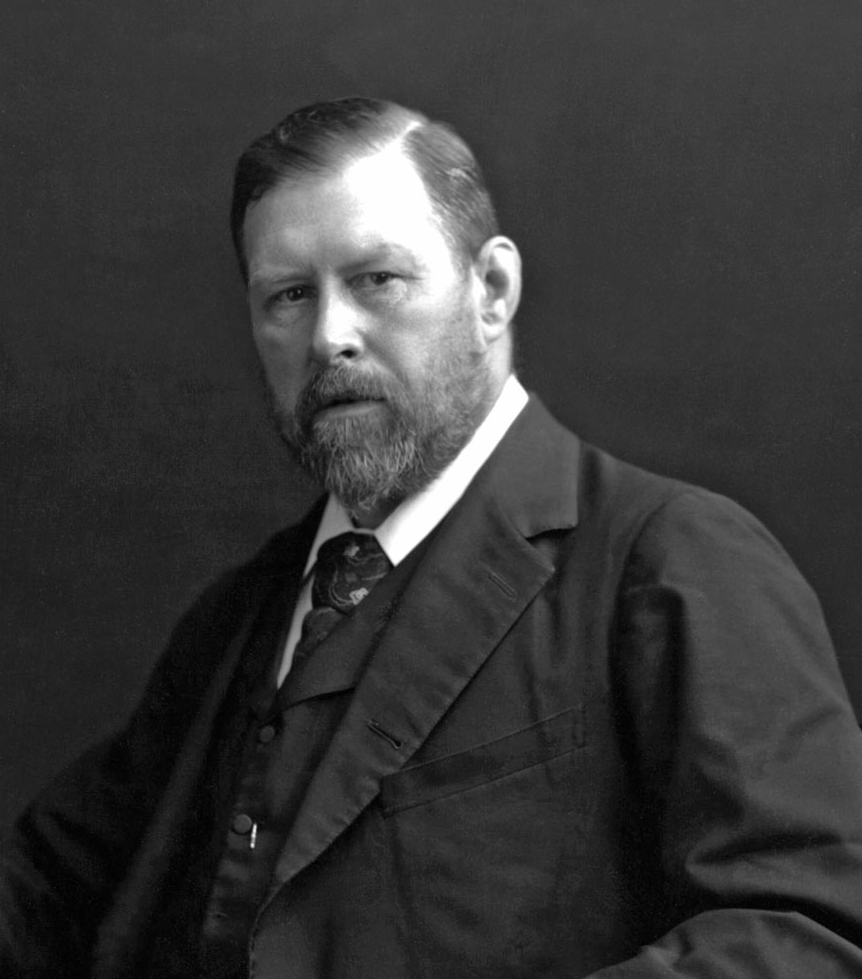
Bram Stoker
The Victorian era was a somewhat gritty and often macabre time for literature. It was also a time when some of the greatest writers produced some of the greatest novels of all time. Charles Dickens, the Bronte sisters, Robert Louis Stevenson, Lewis Caroll and many more classic authors were writers of the Victorian era. Here are three examples of the best novels of the era.

The Picture of Dorian Gray by Oscar Wilde, originally published in 1890, revised and republished in 1891


The Picture of Dorian Gray is a supernatural story about the consequences of ego and moral indecency. Near the start of the novel, Dorian Gray, a wealthy and handsome young aristocrat, is given a portrait of himself that was painted by a young artist named Basil Hallward. Soon after, Dorian is stricken with fear at the fact that his good looks will fade with age. He proclaims out loud that he would trade his soul if he could remain as he is in the picture and have the picture take on his less appealing qualities.

Dorian’s wishes are soon granted and as he goes off to lead an immoral life, his picture begins to take on sinister and evil qualities. Dorian hides it in his attic, where he will not have to see it. Times goes by and Dorian’s picture ages and becomes more and more ugly and terrible. Eventually, Dorian feels guilt at his wicked ways and comes to loathe the picture. He goes into his attic one night with a knife, intending to destroy the picture. His servants find him dead on the floor, with a knife through his heart. The picture had transformed back into that of the beautiful young man and Dorian himself was as he truly was, hideous.

Dracula by Bram Stoker (1897)


Dracula is one of the most popular horror novels of all time. It is also Bram Stoker’s only truly significant novel. The novel is the story of a group of people’s experience with the dreaded Count Dracula and his seductive minions. Jonathan Harker is the first character to run into Count Dracula, when he arrives at his castle and is taken prisoner. Harker eventually escapes and returns home relatively unscathed and soon marries his sweetheart, Mina.

The couple is soon living in a nightmare when they join forces with the men who are trying to kill Dracula. They are attempting to track him down when he finds Mina and bites her. She begins gradually turning into a vampire. Harker and a man named Quincy Morris are eventually able to kill Count Dracula and his minions. The death of the Count stops Mina’s transformation and she and Jonathan are able to live a happy life together–a happier ending than most remakes of the tale.

Wuthering Heights by Emily Bronte (1847)


Wuthering Heights is the only novel ever published by Emily Bronte, who died at the age of thirty. It is a dark and dreary novel about love, passion and manipulation that is set in a dark and dreary manor on a dark and dreary English moor. The main body of the story revolves around the lives and love of Catherine Earnshaw and an orphan that her father has adopted, named Heathcliff.

Heathcliff and Catherine fall in love at a very young age, but Heathcliff’s life is rife with disappointment. He is treated cruelly by Catherine’s brother, Hindley and later suffers the indignity of seeing Catherine marry another man. He goes through the rest of his life plotting revenge on Hindley and Catherine’s husband Edgar and is largely successful. However, Heathcliff becomes a cruel man himself, especially after Catherine dies in childbirth. At the end of his life, Heathcliff is filled with grief and often talks to the ghost of Catherine.

There are many, many more novels from the Victorian era that are worth reading. There is simply not enough room here to list them all. If you are looking for further reading from this era, anything published between 1837 and 1901 is considered Victorian. And you will be sure to find some literary gems among books of this time period.

Shelly Barclay

Best Novels With Travel As A Theme

The 1885 frontispiece
for The Adventures of Huckleberry Finn

Travel is a common theme in classic and modern novels; there are countless books in which the characters take a journey. These novels are popular for many reasons, but most of all because they are exciting. Many people daydream about going on adventures or trips to far off places, but can’t in their everyday lives. Travel novels make this fantasy possible for readers, even if it is only in their minds. Here are some the most fantastic and adventurous novels with a travel theme ever written.

*Spoilers . . . maybe


Around the World in Eighty Days by Jules Verne

Around the World in Eighty Days is the story Phileas Fogg–a man who bets his peers at a gentleman’s club that he can make it (you guessed it) around the world in eighty days. This was in the time before making it around the world in two or three days was feasible, so try your best to imagine how exciting this would have been for a reader who couldn't hop on a passenger jet on a whim.

Phileas Fogg collects his new servant, Passepartout, and sets off on a whirlwind adventure around the globe. Along the way, he encounters the law, elephants, damsels in distress and even bloodthirsty American Indians. After retrieving his damsel and bringing her with him, picking up the messes that his servant makes, avoiding a lawman and fighting a tribe of American Indians, Fogg makes it back to London just in time to win his bet with a few more snafus to make the ending a Jules Verne classic.

The Time Machine by H.G. Wells

The Time Machine is an interesting tale that is not your conventional travel novel. It is the story of a man, referred to only as the “time traveler,” who is telling a story to a group of men. The story is that of his inventing a time machine and traveling back and forth in time. The novel is narrated by one of the men who listened as the time traveler told his unbelievable tale.

The time traveler used his machine and found himself in the year 802,701 AD. He finds that man has evolved into two subspecies, the Eloi, who are a childlike and peaceful race, and the Morlocks, who are pale, apelike creatures who live underground and hunt the Eloi for food. He tells the men about his time there and how he managed to escape the Morlocks and travel 30 million years into the future before returning home. After he finishes his tale, he leaves again in his time machine and never returns.

The Lord of the Rings by J.R.R. Tolkien

Sure, The Lord of the Rings takes place in a completely fictional place, but who cares? It's the ultimate hiking novel. A bunch of guys (well, a wizard, some humans, a few hobbits, an elf and a dwarf) band together to hike across a continent to climb the most treacherous volcano in the land. Yeah, there's more to it than that, but there is no doubt that there is a lot of travel going on in this classic fantasy novel.

The Lord of the Rings
centers on Frodo, a hobbit who has inherited a ring of power that possesses some serious dark powers. Gandalf, a wizard who likes to hang out and smoke with the hobbits, tells Frodo the ring is bad, and that he must bring it to the elves. Frodo takes his gardener Sam and the two leave home on foot. They bump into Merry and Pippin, two more hobbits, and they are all on their way. Soon, they are set upon by evil ring wraiths. They meet a man who knows of their plight and helps them deliver the ring to the elves. The elves are having none of that, so a fellowship is formed. It consists of the Gimli, Gandalf, Boromir, Frodo, Sam, Merry, Pippin, Legolas and Aragorn. They all go on a hike together. Only two make it to the volcano.

The Adventures of Huckleberry Finn by Mark Twain

The Adventures of Huckleberry Finn is the tale of the eponymous boy and a runaway slave named Jim. The two find each other after Huck runs away from his abusive father and Jim runs away from a woman who mentions selling him to an abusive owner. At the time, it was illegal to help a fugitive slave, but Huck likes Jim and isn't much for rules, so the two set off on an adventure together that leads them to con men, elaborate schemes and ultimately a reunion with Huck's best friend Tom Sawyer. This is a must-read for kids.

There are so many travel books out there. I know these are really tailored toward my tastes, but if you're into "woman finds herself on trip across Europe" kind of books, there are plenty of those at the library. No matter what your tastes, pick up a book and go on an adventure whenever you want.